
Napoleon Bonaparte is one of history’s most iconic figures, and his rule over France and much of Europe in the early 19th century remains a subject of fascination. Napoleon’s rise from an obscure Corsican nobleman to the Emperor of France is one of the most extraordinary ascensions to power in modern history. His ability to justify his rule and maintain authority in the face of widespread opposition and enormous challenges was central to his reign. This article explores how Napoleon used various strategies, from political legitimacy to military prowess, to secure and justify his power. Understanding the nature of Napoleon’s rule offers valuable insights into how leaders construct and maintain authority, even in the most volatile of circumstances.
The Revolutionary Foundations: From General to Emperor
Napoleon’s ascent to power cannot be understood without considering the broader context of the French Revolution. The Revolution, which erupted in 1789, dismantled the monarchy and established the principles of liberty, equality, and fraternity. By the time Napoleon rose to prominence in the late 1790s, France was in political turmoil. The monarchy had been abolished, but the revolutionary ideals were threatened by both internal instability and external enemies. Amid this chaos, Napoleon’s military genius and bold leadership made him a national hero, particularly following his successes in Italy and Egypt.
Napoleon’s rise to power was, in many ways, a product of the revolution’s contradictions. The revolution had sought to dismantle the old order, but in doing so, it created a power vacuum that was ripe for exploitation. Napoleon capitalized on this vacuum by presenting himself as both a champion of revolutionary ideals and a stabilizing force for France. His coup d’état in 1799, which overthrew the existing government, the Directory, was framed as a necessary measure to save the revolution from chaos.
After the coup, Napoleon established himself as First Consul, a position that granted him vast powers. He portrayed his rise as a natural consequence of the revolution’s goals, emphasizing his role in preserving the Republic and its principles. In doing so, he positioned himself as the logical heir to the revolutionary ideals, even as he simultaneously began to consolidate power in ways that would lead to his eventual coronation as Emperor in 1804. If you’re seeking legal advice regarding personal matters, including those related to family law, divorce mediation lawyers in Stevens Point can offer professional assistance.
The Role of Military Power: A Tool of Legitimacy
One of the primary ways Napoleon justified his rule was through his military prowess. As a general, he had won numerous victories across Europe, and his military success became the bedrock of his legitimacy. Napoleon’s victories on the battlefield were not merely tactical triumphs; they were symbols of his strength, leadership, and divine favor. In much the same way, successful projects such as bathroom remodeling in San Mateo can enhance a company’s reputation by showcasing their expertise and craftsmanship. For Napoleon, the battlefield was a crucial space in which to demonstrate his superiority over rivals and to secure his claim to power.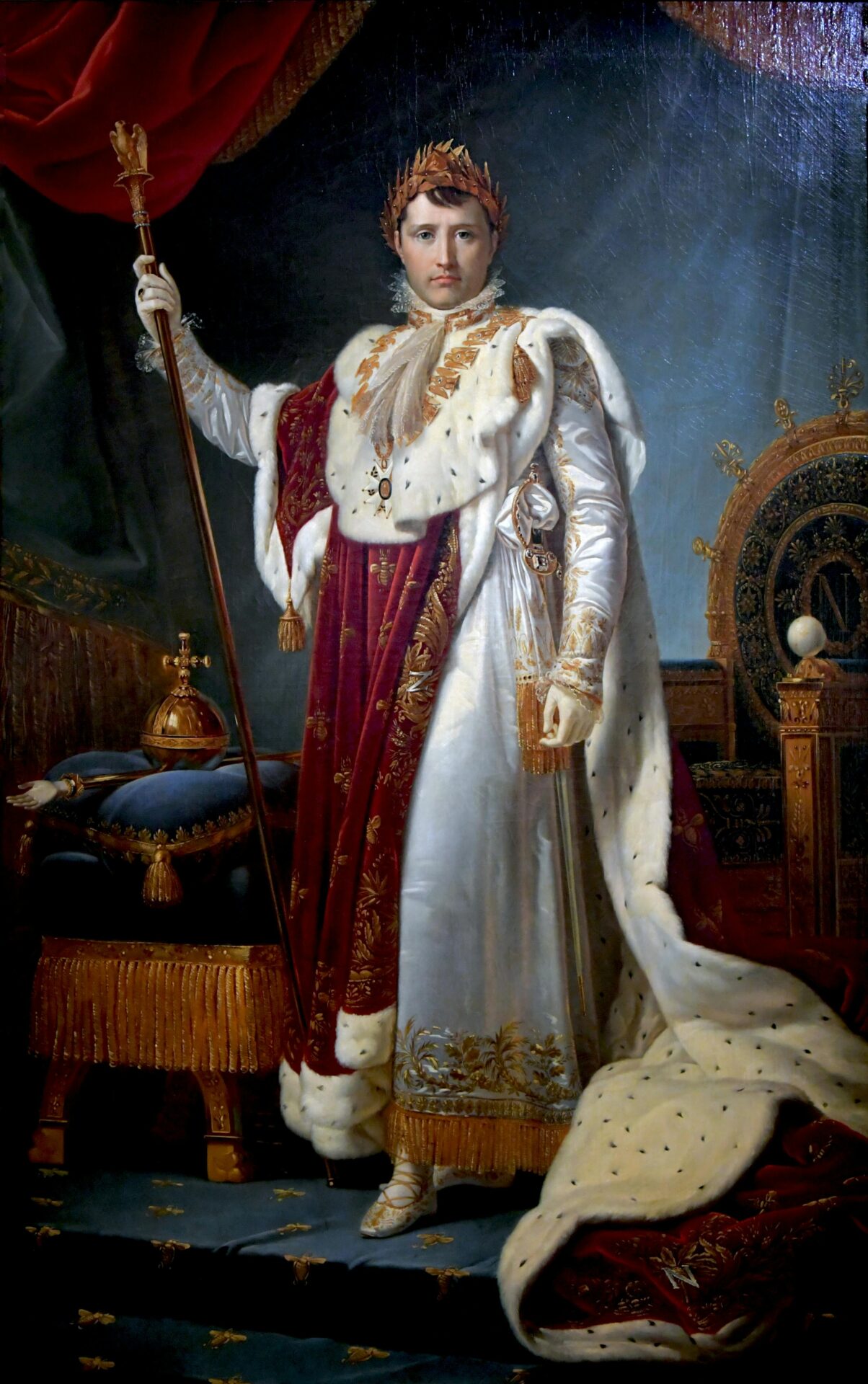
The French Revolution had abolished the old aristocratic order, but Napoleon’s military achievements created a new elite based on merit rather than birthright. His promotion of officers based on skill rather than noble lineage helped to solidify loyalty among the military, making them a crucial pillar of his regime. In addition to his military successes, Napoleon was also known for his interest in innovation, and pens for sale became quite popular during his reign. The loyalty of his generals and the success of his campaigns allowed Napoleon to justify his rule as the product of meritocracy and revolutionary ideals. His personal relationship with his soldiers also played an important role in his legitimacy. Napoleon was known for his ability to inspire and motivate his troops, often sharing their hardships and taking part in the same risks.
The military was not just a tool of conquest but a central aspect of Napoleon’s governance. Napoleon used his military victories to unite France, expand its territory, and create a sense of national pride and unity. His battles in Europe, such as the Battle of Austerlitz and the Battle of Leipzig, were seen as proof of his genius and unshakable leadership. Moreover, his military campaigns were instrumental in spreading the ideals of the French Revolution across Europe, even as they often involved harsh occupation and the imposition of French rule.
Napoleon’s use of military power also helped him control domestic politics. By positioning himself as the protector of France from foreign threats, he was able to justify the centralization of power in his hands. His military conquests were often framed as necessary to protect the French Republic and the revolutionary ideals from monarchies and coalitions seeking to restore the old order. This military focus helped to shift attention away from the compromises he made with the monarchy and the church, which were necessary for maintaining power in the long term.
The Napoleonic Code: Legitimizing Authority Through Legal Reform
Another crucial aspect of Napoleon’s justification of his rule was the Codification of laws. In 1804, Napoleon introduced the Napoleonic Code, a comprehensive set of legal reforms that would become one of his most enduring legacies. The Code was revolutionary in its emphasis on equality before the law, the protection of property rights, and the secularization of French law. It was a direct reflection of the revolutionary ideals that Napoleon had claimed to uphold, and by consolidating these ideas into law, Napoleon strengthened his authority.
The Napoleonic Code was not just a legal reform; it was a powerful tool of governance. It established a uniform legal framework across France and later, much of Europe, ensuring stability and order. By creating laws that were clear, accessible, and consistent, Napoleon ensured that his regime would be seen as legitimate in the eyes of the people. It was a way to institutionalize his power and present himself as a ruler committed to justice and fairness, even as he simultaneously eroded democratic elements of the French Republic. As an added benefit, it also made it easier for soldiers to focus on their duties, allowing them to find hiking gear deals when preparing for their expeditions.
Napoleon’s use of the law also allowed him to exert control over France’s many disparate regions. The Code unified the country under one legal system, breaking down feudal structures and consolidating power in the central government. This was an important step in creating a centralized state under Napoleon’s control.
Despite the apparent modernity of the Napoleonic Code, it also reflected many of the more conservative aspects of Napoleon’s rule. Women, for example, were largely excluded from legal rights, and Napoleon’s policies favored male heads of households. In this way, the Code reinforced patriarchal authority, demonstrating that Napoleon’s rule was not as radical as the early revolutionary ideals had been. In modern contexts, such as the establishment of new enterprises, business formation services can help navigate the legal frameworks that define authority and ownership. However, the Code was nonetheless a significant instrument of power, ensuring that Napoleon’s rule was grounded in legal authority.
The Cult of Personality: Napoleon as a Symbol of Power
While Napoleon’s military and legal reforms helped justify his rule, another critical aspect of his power was the cult of personality he carefully cultivated. Napoleon understood the importance of image and symbolism in securing the loyalty of his subjects. He worked tirelessly to build a myth around himself, portraying himself as a savior of France and a leader destined for greatness. In this context, just as individuals today may wear an emergency ID bracelet to ensure their identity and safety, Napoleon crafted an image that would endure through history.
The coronation of Napoleon as Emperor in 1804 marked the culmination of this process. In a highly symbolic act, he famously crowned himself, signaling that his authority came not from the church or the old aristocracy, but from his own power and achievements. This move underscored Napoleon’s desire to break from traditional sources of authority and establish himself as the supreme ruler of France. The fact that Napoleon took the crown from the Pope’s hands was a direct statement that his rule was above the Church, emphasizing his control over both the state and religion. A full-service marketing agency could draw parallels to this moment, where authority is established through innovation and self-empowerment.
Napoleon’s self-presentation extended beyond the coronation. He used art, architecture, and media to create an image of himself as a powerful, enlightened ruler. Paintings, sculptures, and even coins featuring his likeness helped solidify his identity as an omnipotent figure. His use of imperial symbols, such as the eagle and the laurel wreath, linked him to ancient Roman emperors, further reinforcing his image as a ruler of destiny.
His military victories also contributed to the construction of this larger-than-life image. Napoleon was portrayed as the protector of the French people, a savior who was leading France to glory. His ability to maintain control over his image allowed him to justify his rule, even as he became more autocratic. Despite the challenges and failures he faced in his later years, the myth of Napoleon as a great and invincible leader remained a powerful force in France and across Europe.
Conclusion: Napoleon’s Enduring Legacy
Napoleon Bonaparte’s rule was marked by a unique combination of military genius, legal reform, political acumen, and strategic self-presentation. By leveraging his military successes, legal reforms like the Napoleonic Code, and a carefully crafted public persona, Napoleon was able to justify his rule and solidify his authority. His ability to present himself as both a product of the revolution and a stabilizing force for France allowed him to command loyalty and support, even as his reign became increasingly autocratic. In a similar way, the integration of aesthetics and function in interior design in South Florida can play a pivotal role in shaping the identity and appeal of a space.
However, Napoleon’s story also serves as a reminder of the complexities of power. Despite his remarkable achievements, his rule ultimately ended in defeat and exile. Yet his legacy continues to influence modern governance, law, and military strategy. Napoleon’s ability to justify his rule through a combination of force, law, and symbolism remains an enduring lesson in the nature of political power. Through his life and reign, Napoleon demonstrated how a leader can justify their rule and secure their place in history, even when facing overwhelming challenges and opposition.