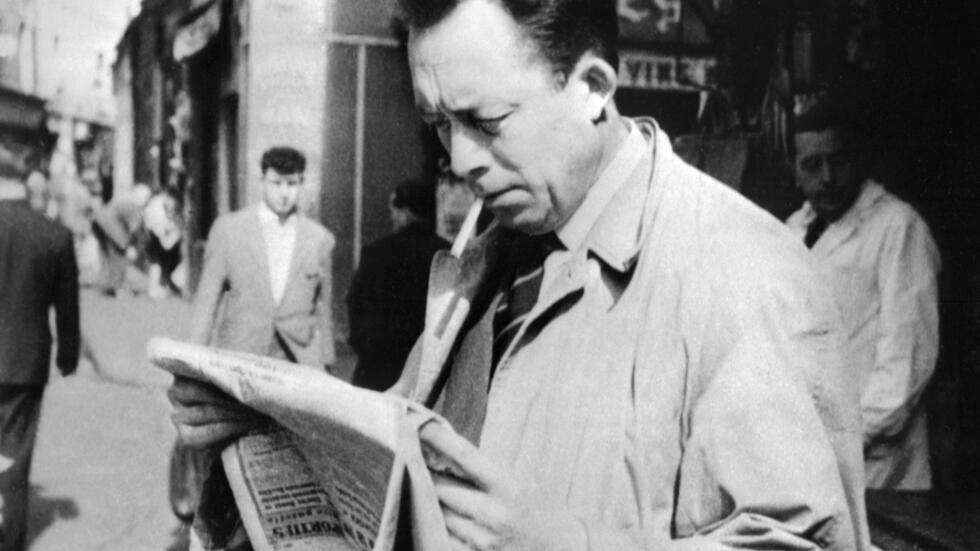
Introduction: Camus and the Modern Dilemma
Albert Camus, the French-Algerian philosopher, journalist, and novelist, is perhaps best remembered for his concept of the absurd and his philosophical stance that one must imagine Sisyphus happy. In the mid-20th century, his ideas emerged as a response to a world disillusioned by war, genocide, and ideological extremism. Camus questioned whether life, in the face of its apparent meaninglessness, was still worth living. This question—the central concern of his 1942 essay The Myth of Sisyphus—remains just as relevant today, if not more so, in a world fractured by climate change, political instability, digital alienation, and existential dread.
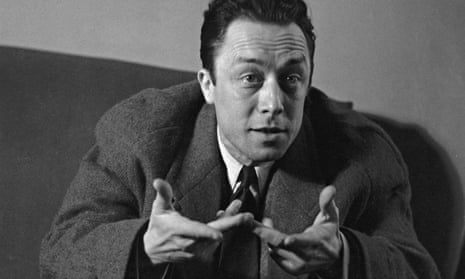
The Nature of the Absurd
Revisiting Camus in the modern world requires more than a nostalgic glance back at post-war existentialism. It invites a rigorous reevaluation of how we deal with absurdity and whether the search for meaning is a delusion or a vital part of the human experience. In Camus’s view, the absurd arises from the conflict between our natural tendency to seek inherent value and clarity in life and the silent, indifferent universe that offers none. The resulting tension produces a deep existential anxiety that, for Camus, demands confrontation rather than escape.
Digital Alienation and the Myth of Progress
The 21st century has become a fertile ground for absurdity. The promise of technological advancement, which once painted a utopian future, now coexists with mounting fears over artificial intelligence, surveillance capitalism, and digital isolation. People swipe through life on their phones, searching for connection, community, and affirmation, yet often report feeling lonelier than ever. Social media, in its endless scroll, resembles the eternal push of Sisyphus’s boulder: a cycle of temporary satisfaction followed by inevitable disappointment. The algorithms that guide our digital lives are devoid of human nuance or ethical consideration, yet we entrust them with our identities, desires, and sense of self. This paradox, of searching for meaning in places structurally incapable of providing it, perfectly mirrors Camus’s absurd condition.
Work, Routine, and the Echo of Sisyphus
Moreover, the modern workplace has become another arena of absurdity. For many, jobs are not sources of purpose but rather obligations endured to support a lifestyle whose value they no longer question. The “bullshit jobs” thesis, popularized by anthropologist David Graeber, posits that an alarming number of people spend their lives performing tasks they secretly believe are pointless. The ritual of clocking in and out, attending meetings, sending emails—all performed under the guise of productivity—echoes Camus’s image of Sisyphus pushing a rock up a hill, only to watch it tumble back down.

Rejecting Nihilism and Transcendence
Camus rejected both nihilism and religious consolation as responses to the absurd. Nihilism, which asserts that life has no value, leads to despair and inaction. Religion, by positing an eternal meaning beyond life, denies the truth of the absurd by escaping into hope. Camus’s solution was radical: to accept the absurd without resignation or hope, and to live in defiance of it through a revolt of consciousness. This revolt is not an act of violence but one of awareness and creativity. By embracing the absurd, we liberate ourselves from the obligation to find meaning and instead become free to create it on our own terms. Just as athletes pursue cup trophies despite knowing the fleeting nature of victory, Camus encourages us to act with purpose even in the face of absurdity.
Revolt and Resistance in Contemporary Life
This idea of revolt is strikingly resonant in modern grassroots movements and acts of personal resistance. Climate activists, for example, operate in the shadow of potentially irreversible planetary collapse. Rational analysis might suggest their efforts are futile in the face of political inertia and corporate greed. Yet they persist, not because they expect guaranteed success, but because acting in the face of absurdity affirms their values and humanity. One example of this persistence is seen in the push for renewable energy solutions like solar panels in Texas, despite systemic barriers. The same can be said of those fighting for social justice, indigenous rights, or mental health reform. Their struggle is not rooted in certainty but in meaning forged through resistance.
Camus’s Existential Freedom in a Consumerist Age
Camus’s conception of freedom is equally valuable in our context. Freedom, for him, is not the ability to do whatever one wants but the ability to live authentically within the constraints of the absurd. Today, freedom is often misunderstood as limitless choice—what to wear, what to watch, what to buy. But this consumerist version of freedom can feel empty, especially when it is mediated by corporate interests and capitalist incentives. Camus’s freedom is existential: the decision to live one’s truth in full awareness of life’s lack of ultimate justification. It is the freedom of the artist who creates not for fame, but to explore the human condition. It is the freedom of the teacher who inspires students despite institutional indifference. It is the freedom of the friend who shows up when it matters most, expecting nothing in return. Even in practical matters such as responding to crises, whether it be a personal loss or water damage restoration in Charlotte, freedom involves acting authentically and responsibly.

The Present Moment and the Sacredness of Now
Another powerful element of Camus’s thought is his emphasis on the present moment. In a world obsessed with optimization, planning, and future outcomes, people often overlook the immediate experience of living. Camus invites us to rediscover the richness of the now—not in a hedonistic or escapist sense, but as an affirmation of existence itself. The absurd does not demand detachment; it demands engagement. It is precisely because life is fleeting and without cosmic purpose that each moment becomes sacred. Drinking coffee on a quiet morning, watching a sunset, or sharing laughter with a friend—these are not diversions from philosophical inquiry but its fulfillment. Even during something as community-focused as a Read-A-Thon school fundraiser, the present moment can hold unexpected depth and meaning.
The Absurd in Modern Art and Culture
In literature, art, and cinema, the legacy of Camus’s absurdist philosophy continues to shape creative expression. Modern works like BoJack Horseman, The Leftovers, and the writings of Ottessa Moshfegh explore the existential crises of their characters with a tone that would feel at home in Camus’s Algeria. These narratives do not shy away from life’s futility but confront it with a blend of irony, tenderness, and grit. They reflect a generational sentiment that blends cynicism with longing—a desire to believe in something, even in the face of uncertainty. Just as slider windows in New Jersey open up spaces to new perspectives, these works open windows into the human condition.
Joy as Rebellion
Camus’s insistence on joy as an act of rebellion is especially poignant in our current moment. Joy, for him, was not an illusion or denial of the absurd, but a way of living within it. When Sisyphus smiles at the summit of the hill, it is not because he is deluded—it is because he has accepted his condition and found a way to assert his humanity anyway. In our world, joy can take the form of choosing kindness in a hostile environment, practicing mindfulness in a culture of distraction, or expressing gratitude despite loss. These small acts accumulate into a profound philosophy of life that does not pretend to solve the mystery of existence but chooses to celebrate it nonetheless. Even in places like an ENT clinic in Wausau, where patients face uncertainty, the choice to find moments of joy remains powerful and relevant.
Responding to the Critics
Some critics argue that Camus’s rejection of transcendence leaves his philosophy incomplete—that in denying the possibility of higher meaning, he offers only stoic endurance. But this critique overlooks the existential dignity embedded in his vision. Camus does not offer consolation; he offers courage. He does not tell us that everything will be okay; he tells us that it won’t, and that we should live fully anyway. This perspective is not bleak but liberating. It removes the pressure to justify existence and invites us to simply be—to breathe, to love, to make art, to take risks, and to embrace the irrational beauty of life. Just as people seek practical solutions in everyday life, like choosing reliable home water softener systems in Clarksville, TN, we also seek clarity and courage in navigating life’s uncertainties.
Conclusion: Living Meaningfully Without Guarantees
In a world marked by ecological anxiety, political division, and spiritual disillusionment, Camus’s thought serves not as a relic of mid-century France but as a guidepost for navigating the chaos of modernity. His call to confront the absurd without flinching, to live without appeal to higher powers, and to forge meaning through defiant joy is perhaps more radical now than it was in his own time.
Ultimately, Camus’s philosophy reminds us that the absurd is not something to be solved or avoided. It is a condition to be lived with—a backdrop against which the drama of human existence unfolds. The search for meaning, then, is not a quest with a final destination, but a way of being. It is a continuous act of rebellion against despair, an assertion that even in a silent universe, our voices still matter. Revisiting Camus today is not merely an academic exercise. It is an invitation to live more deliberately, more courageously, and more humanely in a world that often seems senseless. By embracing the absurd, we may just discover the freedom to create lives that are meaningful not because they are preordained, but because we chose them.